In 2021, there were 38.4 million people living with HIV.
Sub-Saharan Africa accounts for two-thirds of all HIV infections globally.
Gender inequality and discrimination robs women and girls of their fundamental human rights, including the right to education, health and economic opportunities.
The resulting disempowerment also denies women and girls sexual autonomy, decision-making power, dignity and safety.
These impacts are most pronounced in sub-Saharan Africa, where adolescent girls and young women (aged 15 to 24 years) accounted for 25% of HIV infections in 2020, despite representing just 10% of the population.
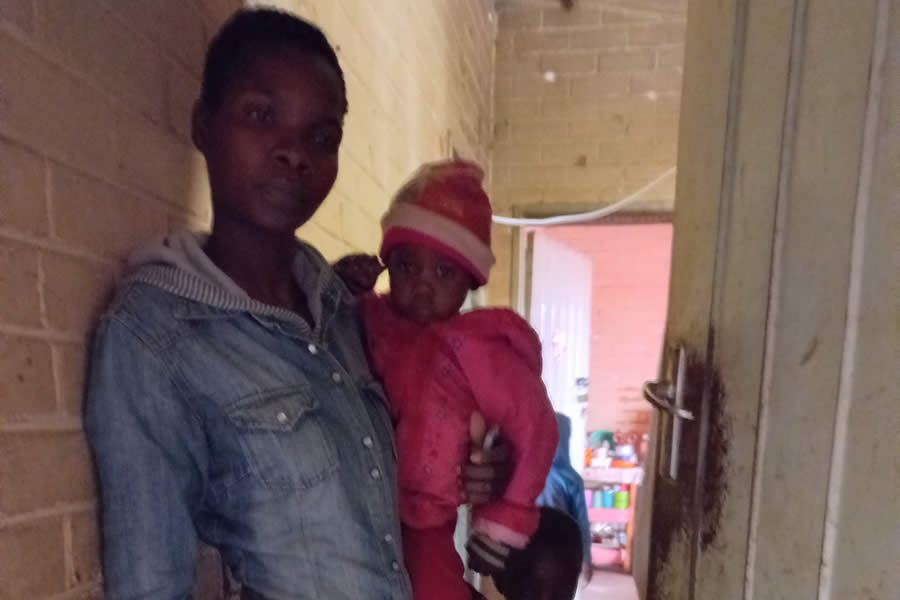
On a recent home visit to a beneficiary of e’Pap instant porridge, a nutrient dense product that contains 24 vitamins and minerals. Tembi (not her real name) is in her early thirties. She is just one of the beneficiaries of a Church funded programme targeting poor and marginalised communities.
Ten years ago, she was diagnosed as being HIV positive. What is remarkable is her attitude and her faith. She proclaimed that when she found out her status, she refused to give up and was helped by her community to “live positively”. Despite Tembi’s manifold challenges, that is what she does.
Tembi has two young children. When her husband discovered that he was positive and had passed the disease to his wife, he fled and has not been heard from since – a story all too common in the region. Tembi was desperate as she was not only HIV affected, but had also lost her home due to the departure of the household’s bread winner.
Sadly, Tembi suffered terrible side effects from her Anti Retroviral Therapy (ART) as she was unable to afford a nutrient rich diet. She suffered from severe headaches, nausea and her temperature high all the time. She relied almost entirely on the good will of her neighbours and the Church to stave off starvation for her family.
In August 2021 Thembi started eating e’Pap daily thanks to a faith-based donor programme delivered by Biscid to the project.
Within a couple of months, Tembi started to finally see the light, feeling so much better – headaches and nausea gone, her temperature normal. At the time of our visit, she showed us her clinic card and her CD count had improved dramatically. For the first time in a long time, Tembi was able to look for work, proud she could finally pay for her older child’s school fees and determined her children will be educated to escape the grip of poverty.
How lucky the e’Pap team is to be working with communities and bringing the life changing benefit of sound nutrition.
Remember, it takes but one seed to start a forest.
By helping to change Tembi’s life we have sewed the start of a forest of hope.
The CD4 count is a test that measures how many CD4 cells you have in your blood. These are a type of white blood cell, called T cells, that move throughout your body to find and destroy bacteria, viruses, and other invading germs.
Your test results help your doctor know how much damage has been done to your immune system and what’s likely to happen next if you don’t start taking antiretroviral treatment (ART).
Doctors also track CD4 levels to check the effectiveness of your treatment and make adjustments as necessary. Your CD4 count should go up if your ART is effective.
Keeping your CD4 count up with ART can hold off symptoms and complications of HIV and help you live longer. Studies have found that people with HIV who stick to their treatments can live as long as people who do not have HIV.